North Central Province, Sri Lanka
Anuradhapura
A Sacred Journey Through Sri Lanka’s Ancient Kingdom
- Best time
- January to March
- Ideal stay
- 1-2 Days
- Travel style
- Culture & Heritage
Updated 1 min read
Anuradhapura, located along the Malwathu Oya (Aruvi Aru) River in central-north Sri Lanka, is the country's most famous ancient ruined capital.
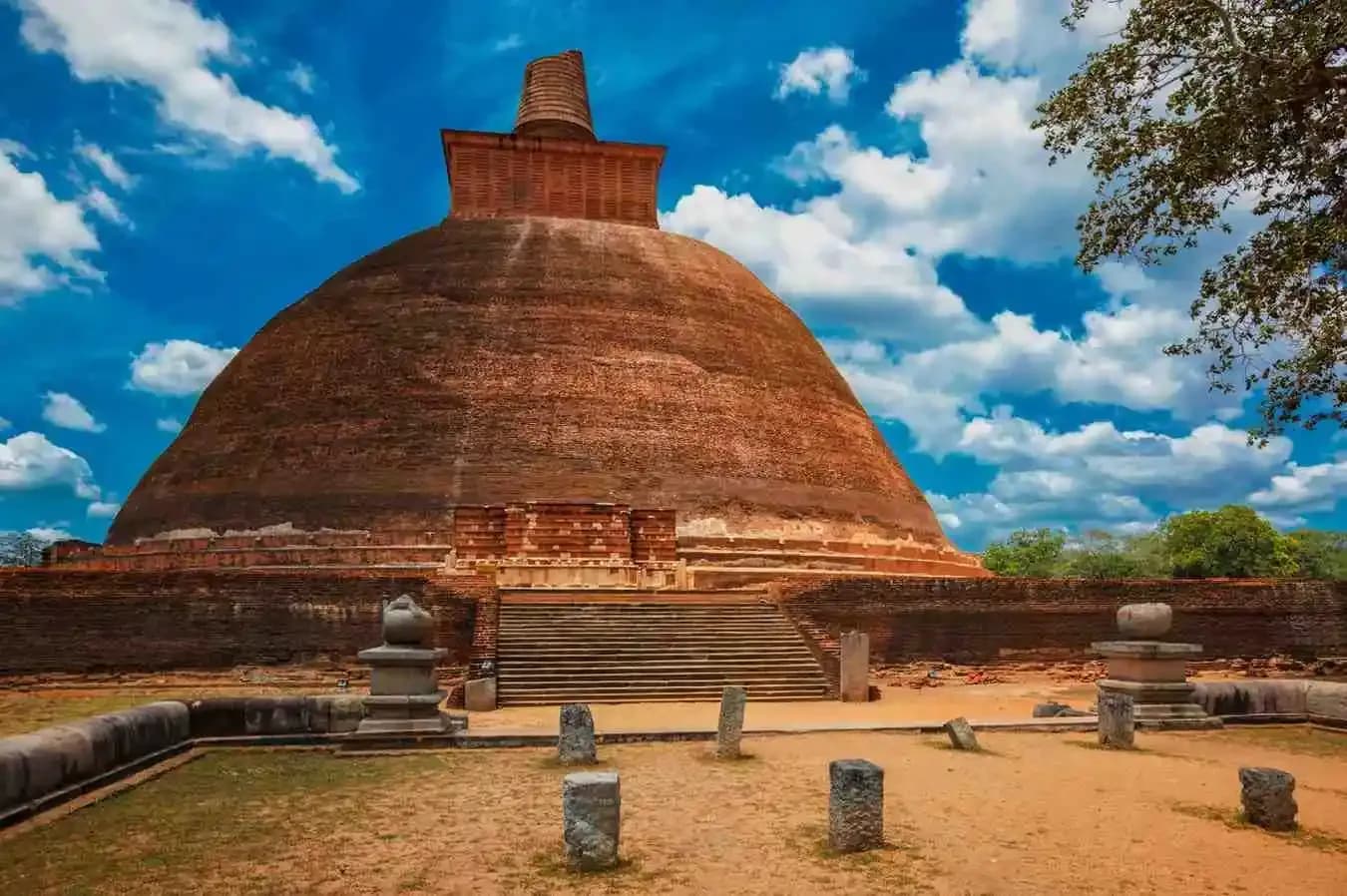
Designated a UNESCO World Heritage Site in 1982, the city is conserved as a vast archaeological park filled with soaring bell-shaped dagobas (stupas) built of sun-dried bricks, ancient temples, royal palaces, intricate stone sculptures, and historic reservoirs. At its spiritual heart stands the Jaya Sri Maha Bodhi—a sacred pipal tree planted around 245 BCE from a branch of the original Bo tree in Bodh Gaya under which Gautama Buddha attained enlightenment, making it the oldest documented human-planted tree in the world.
Serving as the Sinhalese capital from the 4th century BCE to the 11th century CE, Anuradhapura was eventually abandoned to the surrounding jungle after invasions from South India. Rediscovered in the 19th century, the site was carefully restored as a sacred Buddhist pilgrimage destination. Discovering the best things to do in Anuradhapura involves exploring its incredible archaeological treasures, expansive ancient tanks, and quiet forest monasteries.
Visiting the Atamasthana (the eight sacred places of veneration) remains the centerpiece of all Anuradhapura attractions. These revered sites include the Jaya Sri Maha Bodhi, Ruwanwelisaya, Thuparamaya, Lovamahapaya, Abhayagiri Stupa, Jetavanaramaya (once one of the tallest structures in the ancient world), Mirisaweti Stupa, and Lankaramaya. Today, this historic sanctuary stands alongside a modern, well-connected town and serves as the headquarters for the Archaeological Survey of Sri Lanka, making it an essential journey for cultural travelers.